
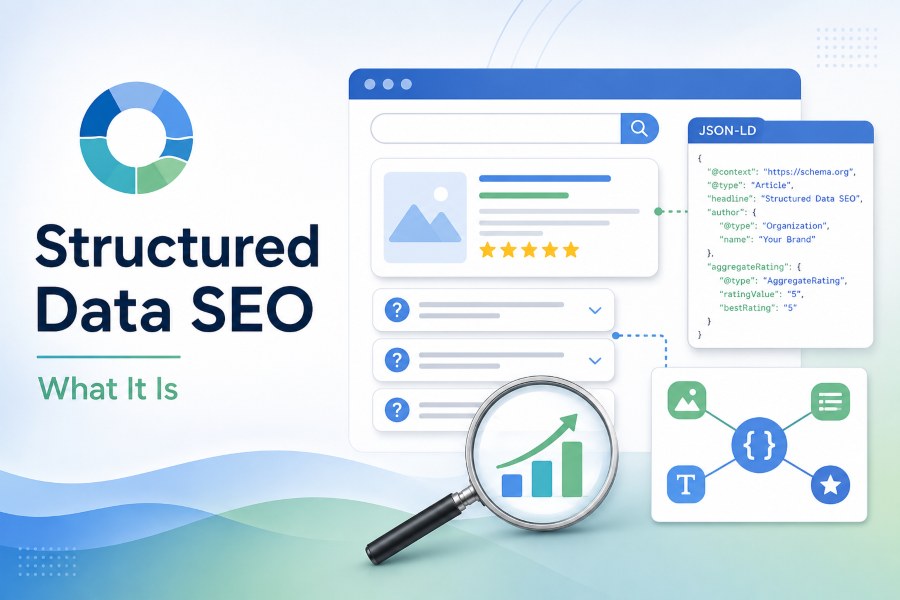
What is structured data SEO? It is the practice of adding organized, machine-readable information to your web pages so search engines can better understand your content, context, entities, and page purpose. For readers, your page may look exactly the same, but behind the scenes structured data helps search engines identify products, reviews, recipes, articles, events, businesses, FAQs, and other important details. This can make your search results more useful, more attractive, and easier to interpret. Structured data does not replace strong content, technical SEO, or a good user experience, but it supports all of them by giving search engines clearer signals. In this guide, you will learn what structured data means, why it matters, how it works, which schema types are common, how to implement it, what mistakes to avoid, and how to use it as part of a practical SEO strategy.
What Structured Data Means For SEO
Structured data is a standardized way of labeling information on a page. Instead of asking search engines to guess what each element means, you provide extra context in a format they can process more reliably.
For example, a page may mention a product name, price, rating, and availability. A human can usually understand those details by reading the page, but a search engine needs clearer signals to classify each item correctly.
In SEO, structured data is commonly connected with schema markup. Schema vocabulary gives websites a shared language for describing content types, properties, and relationships in a way that search engines can understand.
The most common format used today is JSON-LD, which is usually placed in the page code without changing the visible page design. It can describe articles, local businesses, products, videos, breadcrumbs, organizations, and more.
The main goal is not to trick search engines. The goal is to make accurate page information easier to read, so search engines can match your content with the right queries and display eligible enhanced search features.
Why Structured Data Matters For Search Visibility
Structured data SEO matters because search is increasingly based on meaning, not just keywords. Clear markup helps search engines connect your page with entities, attributes, and user intent.
- Clearer Context: Structured data explains what your content represents, such as a product, service, article, recipe, event, or local business.
- Enhanced Results: Eligible pages may appear with ratings, prices, availability, FAQs, breadcrumbs, or other rich result features.
- Better Relevance: Search engines can better understand whether your page matches a specific search query and user need.
- Improved Click Potential: More informative search snippets can help users decide whether your result is worth clicking.
- Stronger Content Signals: Structured data supports your on-page content by confirming important details in a consistent format.
How Structured Data SEO Works
Structured data works by adding a layer of meaning to your content. The page still needs useful visible information, but the markup helps search engines interpret that information with less ambiguity.
1. Search Engines Crawl The Page
Search engines first discover and crawl your page like they would any other page. They read the visible content, HTML structure, metadata, internal signals, and any structured data markup included in the code. This gives them multiple sources for understanding the page.
2. Markup Identifies The Content Type
The markup tells search engines what kind of page they are reading. It may identify the page as an article, product, recipe, local business, job posting, event, or another content type. This classification helps search engines process the page more accurately.
3. Properties Add Specific Details
Structured data includes properties that describe the content in detail. For a product, those details may include name, image, price, brand, rating, and stock status. For an article, they may include headline, author, date published, and publisher information.
4. Search Engines Validate Eligibility
Search engines check whether the markup is technically valid and whether the visible page content supports it. Valid markup does not guarantee rich results, but invalid, misleading, or incomplete markup can prevent eligibility and weaken trust in the page signals.
5. Rich Results May Appear
If the page qualifies, search engines may display enhanced search results. These can include review stars, product information, breadcrumb paths, event details, or other features. The exact display depends on search engine policies, query type, device, and competition.
6. Performance Should Be Monitored
Structured data is not a one-time task. Websites change, templates update, products go out of stock, and content gets revised. Monitoring errors, warnings, impressions, and click behavior helps keep markup accurate and useful over time.
Common Schema Types For Structured Data SEO
Different pages need different schema types. Choosing the right type is important because markup should describe the real content and purpose of the page, not the result you wish the page could earn.
1. Article Schema
Article schema is used for blog posts, news pieces, guides, and editorial content. It can clarify the headline, author, publication date, modified date, and publisher. This helps search engines recognize the content as an informational resource with clear authorship signals.
2. Product Schema
Product schema is useful for ecommerce pages and product detail pages. It can include price, availability, brand, reviews, and ratings. This helps search engines understand commercial details and may support richer product listings in search results.
3. Local Business Schema
Local business schema helps describe a physical business, service area, address, opening hours, business category, and contact details. It is especially useful for local SEO because it reinforces business identity and location-based relevance.
4. FAQ Schema
FAQ schema identifies pages that contain clear questions and answers. The visible content should match the markup closely. It is best used when the page genuinely answers common user questions, not as a way to stuff extra keywords into markup.
5. Breadcrumb Schema
Breadcrumb schema describes the page’s position within the site hierarchy. It helps search engines understand the relationship between categories, subcategories, and pages. It can also make search results cleaner by showing a more readable path.
6. Video Schema
Video schema provides details about video content, such as title, description, thumbnail, upload date, and duration. It helps search engines understand embedded or hosted videos and can improve eligibility for video-focused search features.
How To Add Structured Data To A Website
Adding structured data works best as a careful process. The goal is to match markup to visible page content, validate it, and keep it updated as the website changes.
- Choose The Right Page Type: Decide whether the page is an article, product, service, local business page, recipe, event, video, or another content type.
- Select The Correct Schema: Pick schema that accurately describes the main content of the page instead of forcing markup that does not fit.
- Map Visible Content: Identify the page details that users can already see, such as names, prices, dates, authors, ratings, and descriptions.
- Create The Markup: Use a supported format, usually JSON-LD, and include the required and recommended properties for that schema type.
- Add It To The Page: Place the markup in the page template or content management system so it loads with the correct page.
- Test For Errors: Validate the markup before publishing and fix missing fields, wrong formats, or unsupported properties.
- Monitor After Publishing: Review structured data reports and search performance regularly because site updates can break markup unexpectedly.
Examples Of Structured Data SEO
Examples make structured data easier to understand because they show how markup supports real pages. The best examples are practical, accurate, and tied to visible content users can confirm.
1. Blog Post Markup
A blog post about home budgeting can use article schema to identify the headline, author, publish date, and modified date. This helps search engines separate the main article from navigation, sidebar content, and other template elements on the page.
2. Ecommerce Product Markup
A product page for running shoes can use product schema to describe price, brand, size options, rating, and availability. When this information is accurate and visible, it can support richer commercial search results and improve buyer confidence.
3. Local Service Page Markup
A plumber, dentist, or accountant can use local business schema to clarify location, service area, opening hours, and contact information. This supports local relevance when users search for nearby providers or location-specific services.
4. Recipe Page Markup
A recipe page can use recipe schema to describe ingredients, cooking time, preparation time, nutrition, and instructions. This helps search engines understand the practical details users care about when comparing recipes in search results.
5. Event Page Markup
An event page can use event schema to identify the event name, date, location, ticket status, and organizer. This is useful when users search for concerts, workshops, webinars, classes, or public gatherings with specific dates.
6. FAQ Page Markup
An FAQ page can use FAQ schema when it contains genuine questions and direct answers. The markup should reflect the visible questions exactly, because mismatched or hidden answers can create quality issues and reduce trust.
Common Structured Data SEO Mistakes To Avoid
Structured data can help SEO, but only when it is accurate and maintained. Mistakes often happen when teams copy markup blindly, overpromise details, or forget to update templates.
1. Marking Up Hidden Content
Structured data should describe content that users can actually see on the page. If the markup contains ratings, prices, answers, or claims that are hidden from visitors, search engines may treat it as misleading or low quality.
2. Using The Wrong Schema Type
Choosing a schema type because it looks attractive in search results is a common mistake. A service page should not be marked as a product unless it truly fits. Accuracy matters more than chasing a specific rich result.
3. Leaving Old Details In Templates
Templates can create structured data problems at scale. Old prices, outdated availability, wrong business hours, or copied author details may appear across many pages. Regular audits are important because small template errors can spread quickly.
4. Ignoring Required Properties
Many schema types have required and recommended fields. Missing required fields can make the markup invalid, while missing recommended fields can limit usefulness. Before publishing, check that the most important properties are complete and formatted correctly.
5. Adding Markup Without Content Quality
Structured data cannot rescue thin, outdated, or unhelpful content. If the page itself does not satisfy search intent, markup may not create meaningful SEO gains. Strong content and accurate structured data should work together.
6. Forgetting To Test Updates
Website redesigns, plugin changes, theme updates, and content migrations can break structured data. Testing only at launch is not enough. Rechecking important templates after updates helps prevent silent errors from damaging eligibility.
Best Practices For Structured Data SEO
Good structured data is accurate, specific, and easy to maintain. These best practices help you build markup that supports search engines without creating unnecessary risk.
1. Match Markup To Visible Content
Every important detail in structured data should be supported by visible page content. This includes prices, ratings, authors, dates, business details, and answers. Matching markup to the page keeps the implementation honest and easier to maintain.
2. Use JSON-LD When Possible
JSON-LD is widely used because it is easier to manage than inline markup for many websites. It can be added to templates without changing visible design, which makes implementation cleaner for developers, marketers, and content teams.
3. Start With High Value Pages
You do not need to mark up every page at once. Start with pages where structured data has clear value, such as products, articles, local pages, videos, events, or FAQs. This keeps the work focused and measurable.
4. Keep Schema Specific
Specific markup is usually more useful than broad markup. For example, a recipe page should use recipe schema rather than only generic webpage schema. The more accurately the schema describes the content, the clearer the signal becomes.
5. Validate Before Publishing
Testing helps catch syntax errors, missing properties, and unsupported formats before search engines crawl the page. Validation is especially important when markup is generated by templates, plugins, or custom scripts that affect many pages.
6. Review Reports Regularly
Structured data should be part of ongoing SEO maintenance. Review error reports, warnings, and search appearance data so you can catch problems early. A healthy implementation stays aligned with content, search guidelines, and site changes.
Practical Structured Data SEO Use Cases
Structured data is useful across many types of websites. The right use case depends on what users need to know before they click and what search engines need to understand about the page.
1. Ecommerce Stores
Ecommerce sites can use structured data to highlight products, prices, availability, reviews, and brands. This is valuable because shoppers often compare options directly in search results before deciding which product page deserves their attention.
2. Local Businesses
Local businesses can use markup to reinforce address, opening hours, phone details, service areas, and business categories. These signals support local SEO by making business information clearer and more consistent across important location pages.
3. Publishers And Blogs
Publishers can use article schema to clarify authorship, publication dates, and content type. This is helpful for evergreen guides, news articles, opinion pieces, and tutorials where freshness, credibility, and context influence user trust.
4. Educational Websites
Educational sites can use structured data for courses, learning materials, videos, and FAQs. This helps search engines understand the educational purpose of the content and the practical details students may need before choosing a resource.
5. Event Organizers
Event organizers can mark up dates, venues, ticket availability, performers, and event status. This is especially useful when information changes often, because accurate markup can help users find current details more easily.
6. Software And SaaS Pages
Software pages can use structured data to describe applications, reviews, pricing, operating systems, and feature context. This helps search engines classify the product and can support users who compare tools before signing up or requesting a demo.
Advanced Structured Data SEO Tips
Once the basics are in place, advanced structured data work focuses on accuracy, scale, entity clarity, and long-term maintenance. These tips help make the implementation more strategic.
1. Connect Related Entities
Advanced markup can clarify relationships between entities, such as an author and an organization, a product and a brand, or an event and a venue. These relationships help search engines build a clearer picture of your content ecosystem.
2. Use Consistent Organization Details
Organization details should stay consistent across templates and important pages. Name, logo, contact details, and business identity signals should not vary randomly. Consistency reduces confusion and supports stronger entity recognition over time.
3. Build Markup Into Templates
For larger sites, manual markup is difficult to maintain. Building structured data into templates helps apply accurate schema at scale, as long as the fields pull from reliable data sources and update when page content changes.
4. Prioritize Search Intent
Structured data should support what the page is meant to answer or provide. If users want pricing, availability, event dates, or instructions, markup should clarify those details. Search intent should guide which schema properties matter most.
5. Audit After Major Site Changes
Redesigns, migrations, ecommerce platform changes, and content model updates can affect structured data. A post-launch audit helps confirm that key pages still contain valid markup and that important properties were not lost during the change.
6. Combine Markup With Strong On Page SEO
Structured data works best alongside clear headings, useful content, fast pages, crawlable HTML, and accurate metadata. It is a supporting layer, not a replacement for fundamentals. The strongest results usually come from combining all these signals.
Future Trends In Structured Data SEO
Structured data will likely become more important as search engines, AI systems, and discovery platforms rely more heavily on clear entities and verified page meaning.
1. Stronger Entity Recognition
Search engines are becoming better at identifying people, places, products, brands, and concepts. Structured data can support this process by clearly defining entities and their relationships, especially when content spans many pages or categories.
2. More AI Driven Search Experiences
AI-powered search experiences need reliable source information to summarize and compare content. Accurate structured data may help systems interpret page details more confidently, although it should always be supported by visible, helpful content.
3. Greater Focus On Trust Signals
Authorship, publisher identity, product details, reviews, and business information may continue to matter for trust. Structured data can help organize these signals, but accuracy and transparency will remain essential for long-term credibility.
4. More Automated Markup Tools
Content platforms and SEO tools are likely to make structured data easier to generate. Automation can save time, but it still needs human review because automated markup can misunderstand page purpose or repeat incorrect information at scale.
5. Closer Ties To Content Quality
Search engines are unlikely to reward markup that is disconnected from useful content. Future structured data SEO will likely depend even more on alignment between markup, visible page content, user experience, and real expertise.
6. Ongoing Changes In Rich Results
Search result features change over time. A rich result that appears today may be reduced, expanded, or redesigned later. This means structured data should be treated as a clarity tool first and a visual enhancement tool second.
Frequently Asked Questions
1. What Is Structured Data SEO In Simple Terms?
Structured data SEO means adding organized labels to your web pages so search engines can understand the content more clearly. It helps identify things like products, articles, reviews, events, recipes, and businesses. This can support better search visibility and eligibility for enhanced results.
2. Does Structured Data Directly Improve Rankings?
Structured data is not usually described as a direct ranking factor by itself. However, it can improve how search engines understand your page and may help generate richer search results. Better presentation and relevance can indirectly support SEO performance over time.
3. What Is The Best Format For Structured Data?
JSON-LD is the most commonly recommended format for many structured data implementations. It is easier to add, manage, and update because it can sit separately from visible HTML. This makes it practical for templates, ecommerce sites, blogs, and larger content systems.
4. Can Structured Data Be Added Without A Developer?
Some content management systems, SEO plugins, and ecommerce platforms can generate structured data automatically. However, a developer may still be needed for custom templates, complex schema, or large websites. Even with plugins, the markup should be tested and reviewed for accuracy.
5. How Often Should Structured Data Be Checked?
Structured data should be checked after major website updates, template changes, product data changes, migrations, or plugin updates. For important SEO pages, regular audits are wise because errors can appear quietly and affect eligibility for rich search features.
6. Is Structured Data Only For Large Websites?
No, structured data can help small websites too. A local business, niche blog, service provider, or small online store can use schema markup to clarify important page details. The key is choosing markup that accurately reflects the visible content.
Conclusion
Structured data SEO is about helping search engines understand your pages with greater accuracy. It supports clearer context, better content classification, and eligibility for rich results when the page meets the right requirements. It works best when the markup is accurate, visible content is strong, and technical implementation is clean.
For most websites, the best approach is to start with high-value pages, choose schema types that truly match the content, validate the markup, and monitor it over time. Structured data is not a shortcut, but it is a practical SEO layer that makes your content easier for search engines and users to interpret.